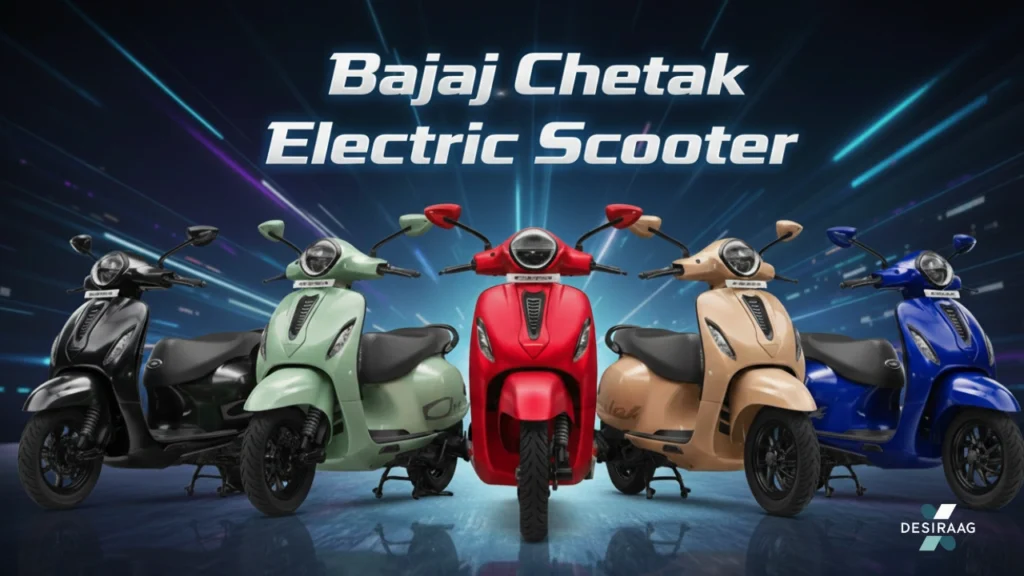
Bajaj Chetak: Since its relaunch in January 2020, the iconic scooter has transformed itself into one of the biggest success stories in India’s electric two-wheeler market. With sales surpassing 5 lakh units across the country, Bajaj has proved that traditional manufacturers can not only compete with EV start-ups but also outpace them by leveraging brand trust, scale, and service networks.
Bajaj Chetak EV Sales Milestone
The journey of the Bajaj Chetak from its 2020 relaunch to crossing the half-million sales mark has been remarkable. What initially took 46 months to sell its first 1 lakh units quickly accelerated into mass adoption.
- Over 5,10,000 units sold to date.
- More than 2,06,000 units sold in just 10 months.
- Since April 2024, over 3,48,000 scooters delivered nationwide.
- Consistently crossing 20,000 units per month in sales.
This growth highlights not just rising demand for EVs but also Bajaj’s strong market positioning.
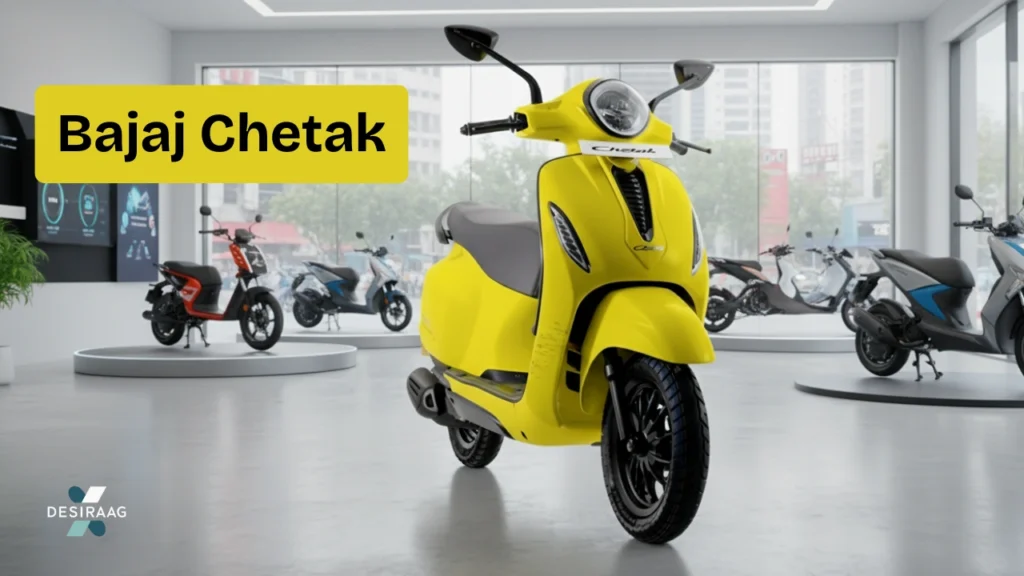
Bajaj Chetak: Variants, Battery Options & Pricing
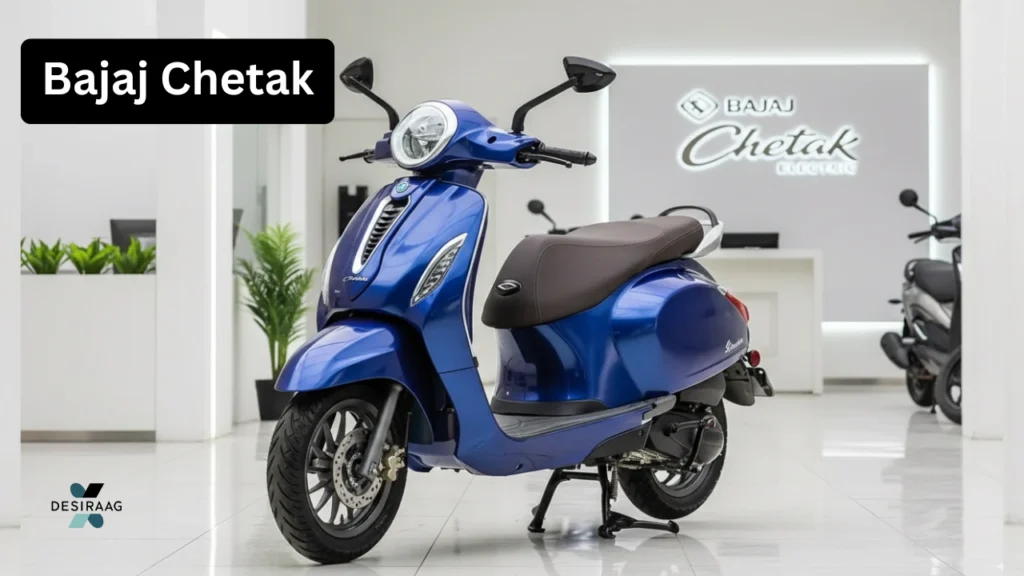
Bajaj has strategically introduced multiple variants of the Chetak to appeal to both budget and premium EV buyers.
Also Read

- Variants: 3001, 3501, 3502, and 3503.
- Battery packs:
- 3 kWh (base variant, budget-friendly).
- 3.5 kWh (higher trims with extended range & added features).
- Pricing: Starts at ₹99,900 (ex-showroom) and goes up to ₹1.40 lakh depending on the model.
This range ensures that the Bajaj Chetak is accessible to urban commuters as well as long-distance riders looking for reliable EV options.
Bajaj Chetak EV Sales Growth and Challenges
The Chetak’s journey wasn’t without hurdles. Production was briefly disrupted due to the global shortage of rare-earth magnets, impacting deliveries. However, Bajaj bounced back stronger with:
- Resumed production at full capacity.
- Strengthened dealer and service networks.
- Leveraged customer trust built over decades.
Despite these challenges, Bajaj emerged as one of the top three EV two-wheeler manufacturers in India, alongside Ola Electric and TVS.
Service Network Advantage
One of the strongest factors driving Chetak’s success is Bajaj’s extensive service network:
- Over 3,800+ touchpoints nationwide.
- Ensures accessibility even in tier-2 and tier-3 cities.
- Builds confidence for buyers transitioning from ICE scooters to EVs.
This level of after-sales support is something start-ups struggle to match, giving Bajaj an upper hand.
Market Share and Competitive Edge
The electric scooter market is rapidly evolving, and Bajaj Chetak is no longer playing catch-up.
- Ola Electric continues to lead in volume sales.
- Bajaj and TVS are catching up quickly, reshaping the market.
- Ather Energy still holds a strong premium niche but is now behind Bajaj and TVS in overall volumes.
Together, Bajaj and TVS are proving that established manufacturers can challenge start-up dominance by combining manufacturing scale, trust, and widespread service reach.
A Sign of Market Transition
The Chetak’s exponential growth mirrors the Indian EV market’s shift:
- First 1,00,000 sales took 46 months.
- Next 2,00,000 sales came in under 10 months.
- Consumers are rapidly shifting from ICE scooters to EVs.
- Trusted legacy brands are now seen as safe and reliable EV options.
This marks a new era of electric mobility in India, with Bajaj playing a central role.
Final Thoughts
The Bajaj Chetak has not only crossed the milestone of 5 lakh units but has also changed the dynamics of India’s EV scooter market. By offering multiple variants, competitive pricing, and a strong service backbone, Bajaj has built momentum that is difficult to slow down. As government incentives and consumer awareness continue to rise, the Chetak’s growth trajectory looks unstoppable. With legacy manufacturers now leading the charge, the Indian EV market is entering its most exciting phase yet. The Bajaj Chetak stands tall as a symbol of trust, innovation, and the future of two-wheeler mobility.